Age and Beauty
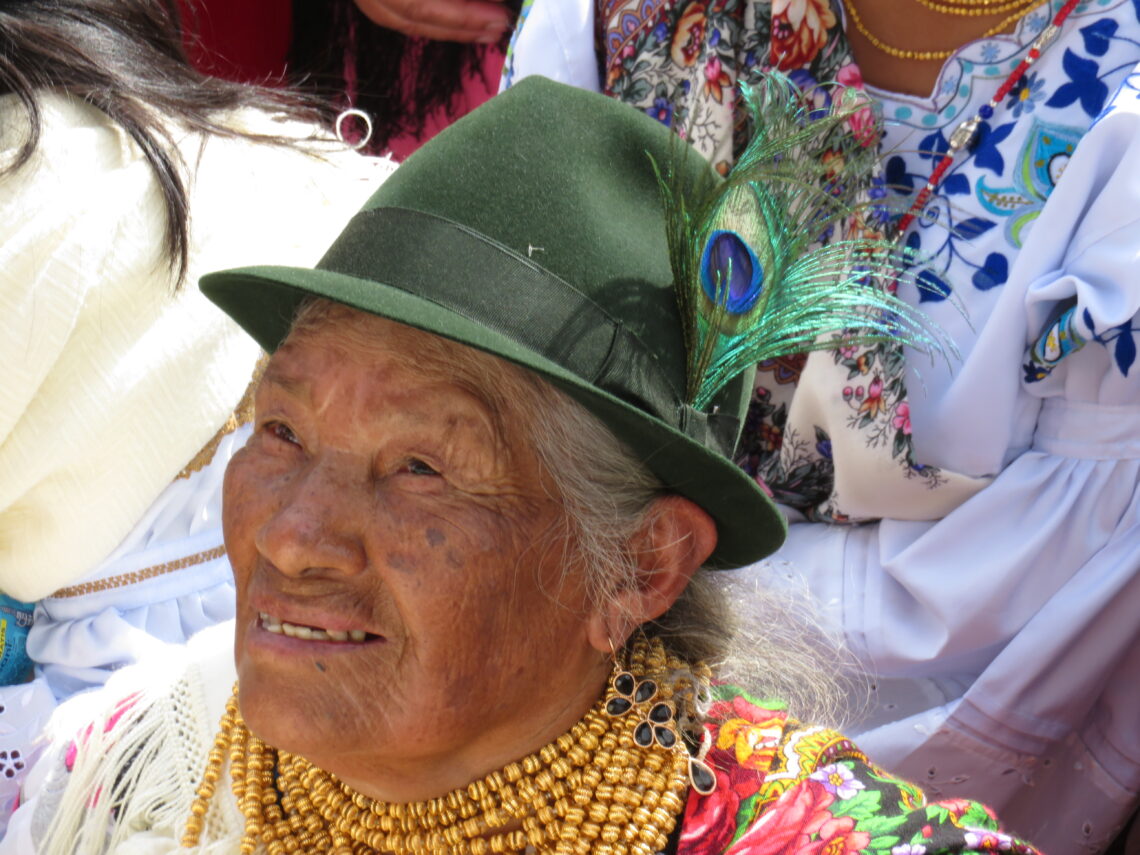
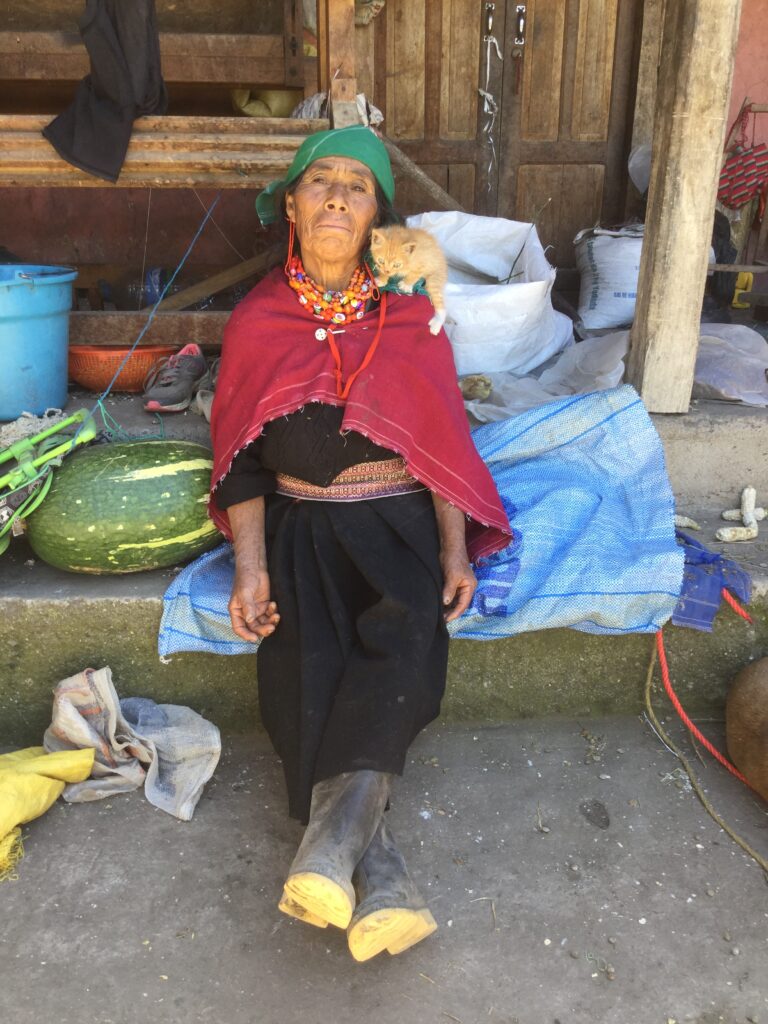
During a period I spent in the northern highlands of Ecuador, living with an Indigenous family there, I spent time photographing the local people and particularly the older members of the community. I was struck deeply by their beauty, by the sense of radiance that came from them. It’s a beauty that transcends conventional concepts, anchored in notions of youth as they generally are, particularly in the world we live in now, with its age defying cosmetic and surgical procedures designed to delay and restore an appearance of youth and beauty to anyone prepared to buy it. Except is doesn’t and it can’t. The people I was photographing had come down through long years and often hard lives, materially not well off, but were nevertheless respected member of the community and revered as ‘elders’, repositories of wisdom that their long lives had given them. They had reached a prime, like some great old tree that has seen summers, droughts, storms, harsh winters and stand resplendent in the countryside just being what they are, not having to prove anything. They had simple dignity and integrity.

It would be easy for this to develop into a long diatribe against modern views on old age, against the way older people are treated in our modern societies. I have taken time to think these through more deeply, keenly aware too that my particular views can seem very biased and say at least as much about my personal prejudices as any objective reality. Life and the world we live in have changed immensely just in the time it has taken me to move from childhood into older age myself. For one thing the nuclear family that was more or less the norm in many societies including in Britain was starting to fragment probably from the 1960s onwards. When I was still a child and young adult my grandparents still lived in their own home, even into advancing years, with attendant illness and disabilities. Those were the years of the Giles cartoons with the then typical British working class extended family, where grandma, dressed in old fashioned black, was always seated in a chair in the corner of the room, a respected family authority. Care homes for the elderly or designated accommodation schemes for older people were still unheard of.
As much as anything, too, it is wrapped up in the conflation of sexual attractiveness and viability with beauty, when the two often have little or nothing to do with one another. Inevitably if you are conflating beauty with sexual viability (including reproductive viability) that will exclude people over reproductive ages. And when youth is conflated with beauty and social acceptability this almost inevitably means people will be striving to retain the appearance of youth as long as possible, resorting to whatever means on offer to achieve this. That and, as importantly, the undervaluing of ‘wisdom’ as a quality that comes with age and life experience, particularly since the advent of Artificial Intelligence invading every aspect of our lives. Age is now associated with disability and declining cognitive faculties anyway and older people can too easily be seen as having little to offer the world, unless in commercial terms as a ‘market’ to be exploited for profit of some order.
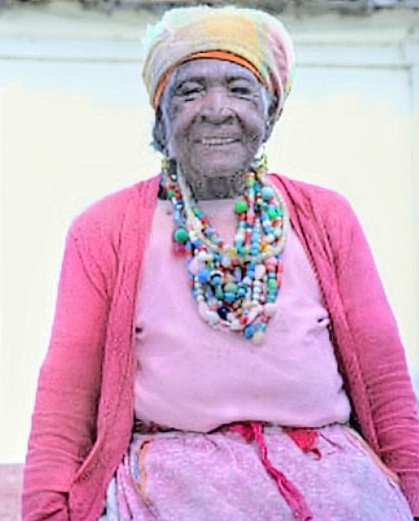
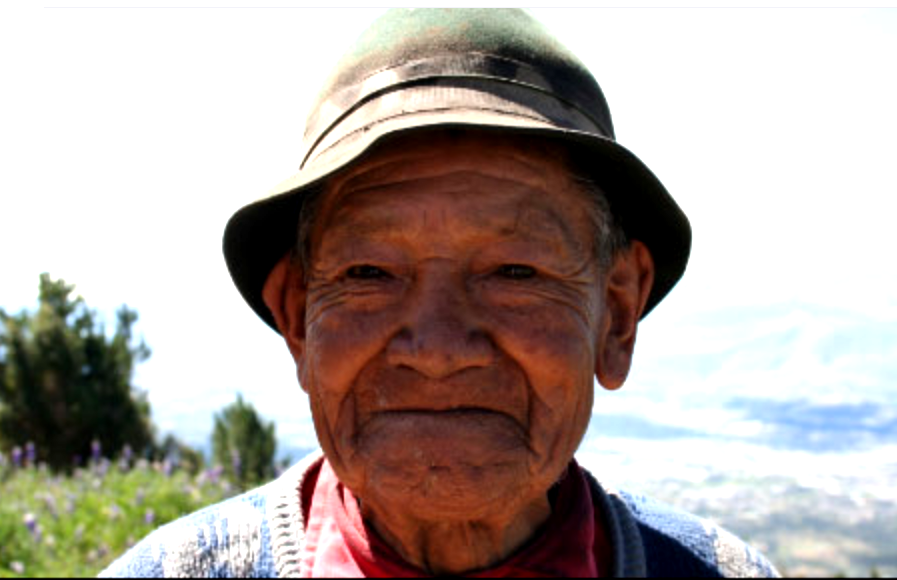
In more traditional or Indigenous societies aged people are are viewed very differently. During a period I spent in Nepal during the second phase of the Pilgrimage in 2021, I formed a friendship with the young man responsible for managing the homestay I was living in then. He was probably in his early twenties, or possibly younger, but a delightful person and he would frequently take me out for rides on the back of his motorbike. He once asked me what I thought it would be appropriate to call me to honour the closeness of our friendship but which still respected the age disparity. I didn’t know, so he suggested he should call me ‘grandmother’ which shocked and dismayed me! I had the prejudice of person from a modern western culture where grandparents represented something aged and effectively past it. When I told him this he, too was shocked and countered that grandparents in his society were very highly esteemed, something he wanted to express in our friendship. This found a brief echo several years later to last year in 2025, when I was then staying in Rishikesh in India. I was waiting outside of an ATM then in use by a man and his young son. The boy would have been around six or seven years old. He looked at me through the glass window and coming out, looked up at me, then reached down and touched my feet, which in traditional Indian societies is a sign of esteem and reverence usually reserved for elder authority figures.
Keeping any post simple and on subject is inevitably a challenge given the tendency to develop the theme as it interrelates with broader issues and ‘age’ is a complex subject that touches on many sensitivities too. To appear to be encouraging a return to some idealised past of reverence towards older people could readily be countered with stories of poverty, chronic illnesses and the lurking dread of the workhouse that many poorer older people lived in fear of in earlier times (1). What is beautiful about poverty and suffering? Modern societies in so called developed countries generally have welfare schemes that support the aged and better nutrition and advances in medical technologies mean people are living longer than they used to. Since it is intimately wrapped up in the way societies have evolved and the increasing domination of ‘modern global culture’ (2) and social media, the debates will inevitably center on these too.
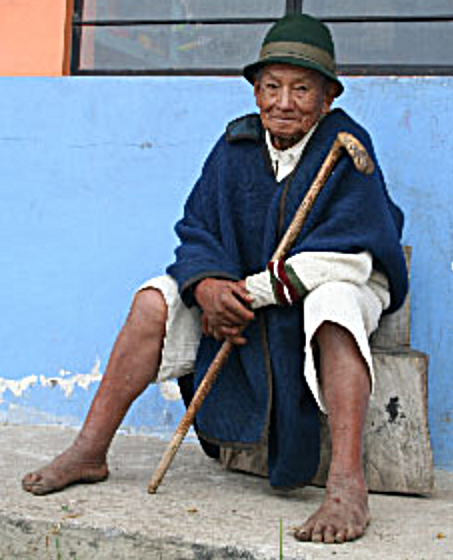
Clearly there will be many views and no simple answers. But in highlighting what seems to me the beauty of many older people from traditional and Indigenous societies, I am still left with a feeling that, despite all the manifest improvements in living standards that our modern world has given us, something ineffable has been lost.
Featured image of a traditionally dressed woman of the Caranqui culture taken at the festival of San Juan Baptista, Hacienda Zuleta, Imbabura province, Ecuador in July 2017
1. See the relevant account in Cider with Rosie by Laurie Lee (1959) for example.
2. I use the term ‘modern global culture’ to refer to the rapid proliferation of the technology and social media driven culture with its new celebrity elites and associated imagery, which is gradually spreading a homogenising ‘mono culture’ and over writing the rich ethnic diversity of former traditional cultures.