Nothing Beside Remains. Ode to Dharali
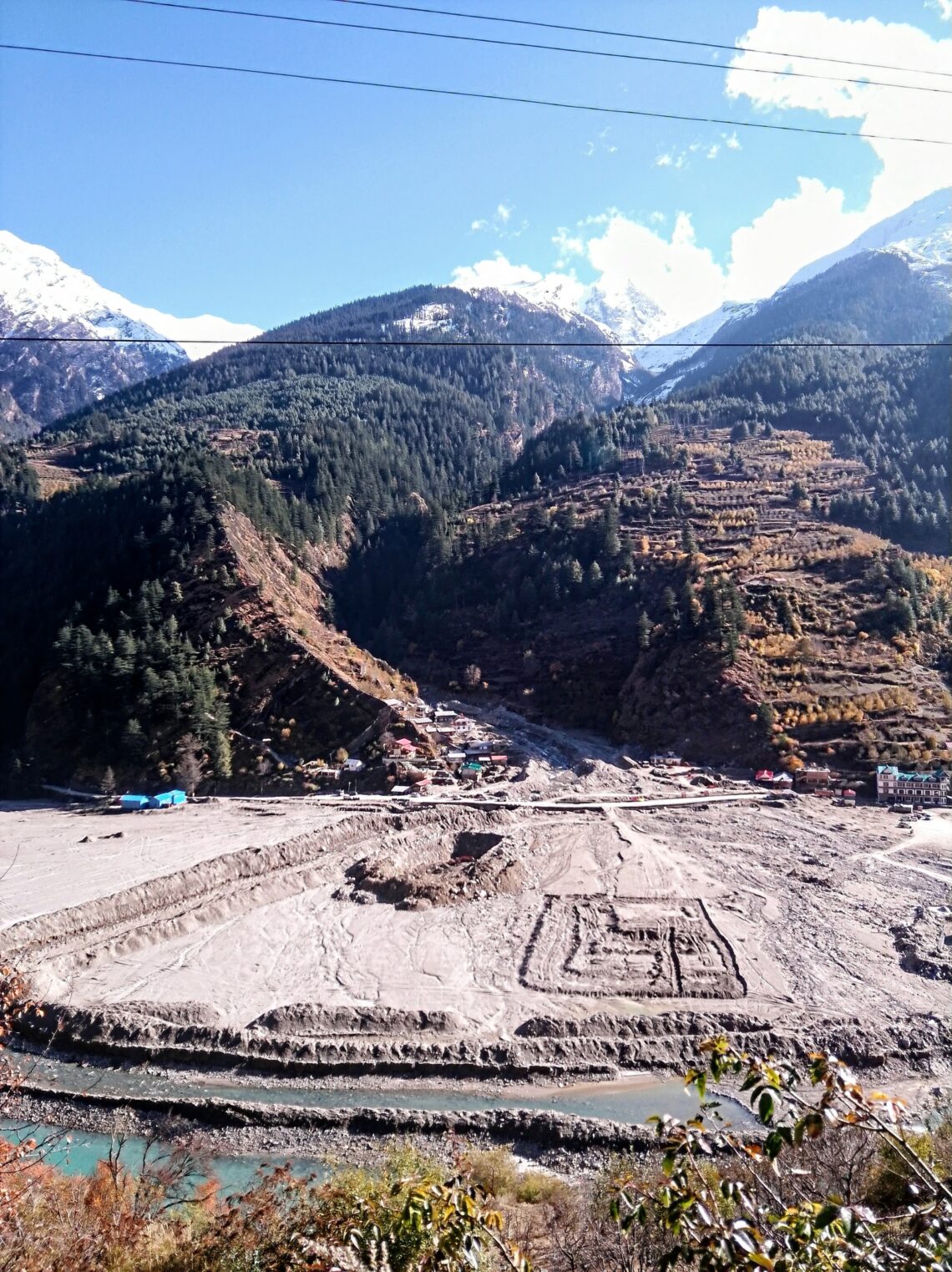
Well, not a lot. The Himalayan village of Dharali, ancient pilgrimage stop on the way to Gangotri, was effectively destroyed by a massive landslide on 5th August 2025. I had made my final visit there just earlier in May, a short trip staying just three nights at this place that, for me, I always saw as the epicentre of the 2020 India Pilgrimage. In Don’t Stop the Dance I recounted this terrible event and the effect it had on me and, for a long time, I thought it would be impossible to go back there and see it the way it is now.
Just last weekend I finally determined that I should go and face what there was to see. After all, the people who lived there had suffered this terrible disaster that had killed many people and destroyed their homes and livelihoods. Did that mean they somehow became pariahs to be air brushed out of existence? To visit and see for myself and take my sorrow and hopes for a better future for them seemed the least I could do.
I had at least been inoculated to some degree by seeing pictures of the place post disaster so I was better prepared for what I would see. Sahdev, my guide and driver, who also loved Dharali and its people and who had first introduced me to the place during my first visit to Gangotri, had been there recently himself and sent photos, although it had taken him a full year before he felt able to go back. He had lost good friends there. The pictures had showed how extensive the devastation was with a vast blanket of featureless sediment – mud, gravel and rock – uniformly covering everything. Having watched the several stages of the disaster pan out (there were six in all) I had no expectations of finding anything that I could relate to as the original village still surviving. I fully expected that the people living in the houses around the courtyard of which the guesthouse I used to stay in was a part, would likely have been killed. It was never not a profoundly upsetting thought.
Having spent a cold night at a roadside hotel not far from Harsil, we started gone 9 am after chai and paratha, to give time for the ice on the road to melt, so it was already bright and sunny. Harsil is the village a few kilometres along from Dharali and the location of a large army base, consequent on the proximity of the border with China. The landslide had been so immense that one arc of it had fallen down upon Harsil too and destroyed part of the base, killing several army personnel. The featureless blanket it left in its wake extended along the banks of the river there, the helipad now gone and tourists were starting to exploit it as a convenient beach to approach the river.
I felt heavy with dread as we approached Dharali, but the wave of emotion and tears it occasioned passed and as we drove in, it all seemed normal enough. The landslide had taken a defined course that took some buildings out completely leaving others alongside almost untouched. Everything there was as I remembered: small shops and guesthouses approaching the little market square and hotel where I used to stay, but suddenly there was nothing. Just the featureless blanket of mud, rubble and rock.
The whole complex there had been the epicentre of the age old pilgrimage route with many small shops, chai houses and restaurants, little guesthouses and larger more modern hotels. I have such a clear picture of the way it looked across the several visits I made there over the years. The times I walked down the narrow lane towards the temple to the river; the times I carried out different pujas down in the forecourt of Kalp Kedar itself.
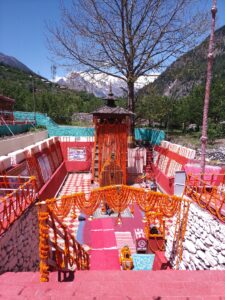
The walks to the suspension bridge over the river where I used to stop midway and wave to the old baba who lived in his makeshift camp down on the other side. In the town itself I remember the time when a colourful mule train was tied up wild west style outside some shop; the time when I interviewed a young European man dressed yogi style in a small guesthouse doing his own pilgrimage to Gangotri. There were the several Himalayan mountain dogs who became so accustomed to me they would greet me tails wagging whenever I arrived; the apple merchants driving off stray cows looking for an easy meal; the hoopoe bird sitting preening itself in the early morning sunshine on the balcony of the little guesthouse opposite where we were staying on the last morning of my first visit, which then flew in an arc right in front of me; the kind hotel owner and friend of Sahdev who died saving his staff and family. The impossible pathos of life that takes life but then gives it back to allow people to continue, to rebuild and carry on, and make new homes, new enterprises and continue weaving the tapestry of the present that becomes the past, in time, just as the ancient Kalp Kedar temple, now under sixty feet of debris, has been the focus and rationale of an evolving fabric of history and people there for close to a thousand years.
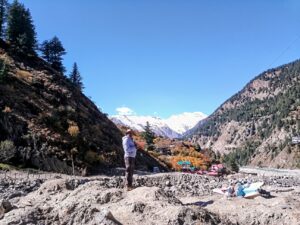
Parking the car we first struck out into the featureless no man’s land between the newly constructed road and the river, where once there had been the temple entrance and associated buildings. Apple orchards had once flourished there and I remember the scent of the blossoms in the spring, and the hum of the bees working them, and the bright butterflies everywhere. In the spring, cuckoos would call from the hill slopes. I wanted to find some special or significant place to make a small offering I had brought with me and do a little puja of remembrance and closure, but there was nowhere remarkable in any way as being ‘special’; unless of course it was the whole moonscape that the place now was.
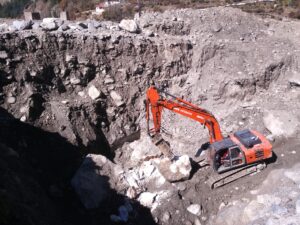
I eventually settled on a small spot close to the tributary river and where a mechanical digger was in the process of trying to locate Kalp Kedar; they had just exposed a small part of a brick wall, but the whole was an impossible mess with huge boulders lying everywhere that needed breaking up first. There we excavated a little cavity in the ground and I made my offering with T light and incense sticks and Sahdev chanted the sacred Vedic mantras.
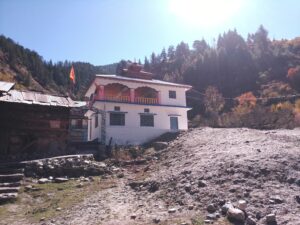
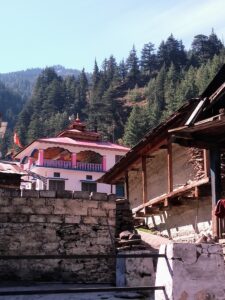
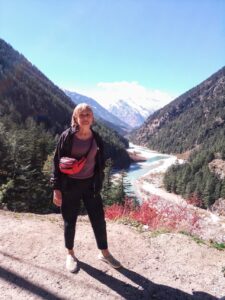
Then we made our way up to where the remains of the traditional village still survived, the ancient narrow lane which I recall so well climbing steeply between the old houses, several of which still survived. Reaching the point where the lane led into the recreation ground and temple forecourt, I saw that the old houses to one side of the original shared courtyard still stood, and their families still lived there. A lady who remembered me happily greeted me; I was so happy to see her, that she had survived. So, too, the little baby I remembered from another house who I also feared would have perished, was playing happily on the balcony, now a little toddler. Otherwise the destruction along the line of the landslide that followed the course of the river was like looking at a bomb site where nothing resembling a house or anything survived, just piles of timber and rubble, including the home and little guest house where I used to stay. We lingered there for awhile then made it back down to the road and debated where to from there. There seemed little point in hanging around much longer. The morning was advancing and the day bright, cloudless and beautiful as I recalled from earlier times. We drove a bit further along the road towards Gangotri, a road I used to walk along many times when living there, and stopped for me to take photos of my favourite views. Then, eventually, we turned about and slowly made our way back towards Harsil and the lower elevations, leaving Dharali behind.
My abiding memory is that more than a whole year further on from when the disaster took place on the 5th August 2025, nothing much has changed. Over a year has passed yet recovery work has been painfully slow or absent. People have started to build new houses true, and Kalp Kedar temple is finally being re-excavated, but otherwise little enough. What I saw on 6th November 2026 could have been 6th November 2025 for all the progress that had been made. Yet it is the norm that governments set aside funds for this sort of tragedy, to help those affected rebuild their lives. According to common report almost nothing has been done. Now, election year as it is, finally a little is happening. A little. In time Dharali will recover and this will become another epispode in its long life. Kalp Kedar itself being nearly a thousand years old will have seen many incarnations across time, as the centuries passed. This is just a heart beat in its long life. It will emerge from the wreckage and once again stand sentinel on the banks of the Bhagirathi River as a new Dharali takes shape around it. I think I am unlikely to see this. But I have faith and hope that it will happen.
The following offers a translation into Hindi for Indian readers. I have used Google translate for this and hope it has given a faithful version in Hindi of my original English.
neeche bhartiya pathakon ke liye hindi anuvaad diya gaya hai. iske liye maine google translate ka upyog kiya hai aur mujhe ummeed hai ki isne mere mool angreji path ka sateek hindi anuvaad prastut kiya hai.
khair, bahut kuch to nahin bacha. gangotri ke raste mein padne wala himalayi gaon ‘dharali’ – jo teerthyatriyon ke liye ek prachin padav tha – 5 august 2025 ko aaye ek bheeshan bhuskhalan (landslid) mein puri tarah tabah ho gaya. main may mein hi wahan aakhiri baar gaya tha; bus teen raaton ke liye. mere liye, yah jagah 2020 ki ‘bharat teerthyatra’ ka mukhya kendra thi. apni kitab ‘dont stop the dans’ mein maine is bhayanak ghatna aur mujh par pade iske asar ke baare mein likha hai. lambe samay tak mujhe yahi laga ki ab wahan wapas jana aur us jagah ko is haal mein dekhna mere liye namumkin hoga. pichle saptahant maine aakhirkaar tay kiya ki mujhe wahan jana chahiye aur jo kuch bhi bacha hai, use dekhna chahiye. aakhirkar, wahan rahane wale logon ne ek aisi bhayanak aapda jheli thi, jisme kai logon ki jaan chali gai aur unke ghar-bar aur rozi-roti sab barbad ho gaye. kya iska matlab yah hai ki ve ab samaj se puri tarah cut gaye han, mano unka astitva hi mit gaya ho? wahan jaakar khud halat dekhna, aur unke liye apna dukh aur behtar bhavishya ki ummiden lekar jana – kam se kam itna to main kar hi sakta tha. aapda ke baad ki tasveeren dekhkar main kuch had tak mansik roop se taiyar ho chuka tha ki wahan mujhe kya dekhne ko milega. mere guide aur driver, sahdev – jinhen bhi dharali aur wahan ke logon se bahut lagav tha, aur jinhone gangotri ki meri pehli yatra ke dauran hi mujhe is jagah se parichit karaya tha – ve haal hi mein wahan gaye the aur unhone mujhe kuch tasveeren bheji thin. halanki, unhen wapas jaane ki himmat jutane mein pura ek saal lag gaya tha. wahan unhone apne kai acche doston ko kho diya tha. tasveeron mein tabahi ka manzar saaf dikh raha tha; har taraf bus malba – kichad, kankad aur chattanen – faili hui thin, jisne sab kuch dhak diya tha. aapda ke alg-alg charanon (kul chhah charan) ko dekhte hue, mujhe aisi koi ummeed nahin thi ki wahan kuch bhi aisa bacha hoga jise main ‘purane gaon’ ke roop mein pehchan sakun. mujhe puri aashanka thi ki us aangan ke aas-pas ke gharon mein rahane wale log – jiska hissa wah guest house bhi tha jahan main rukta tha – shayad ab jeevit nahin bache honge. yah khayal hi man ko bahut gehra aaghat pahunchane wala tha. harsil ke paas ek sadak kinare bane hotel mein ek thandi raat bitaane ke bad, hum subah 9 baje ke kuch der baad chai aur paratha khakar nikle. humne thoda intezaar kiya taki sadak par jami barf pighal jaye, aur jab hum nikle to acchi dhoop khili hui thi. harsil, dharali se kuch kilometer aage ek gaon hai. china ki seema ke paas hone ke karan, yahan sena ka ek bada base bhi hai. bhuskhalan (landslid) itna bhayanak tha ki iska ek hissa harsil tak aa pahuncha, jisse sena ke base ka kuch hissa nasht ho gaya aur kai sainik maare gaye. iske baad wahan har taraf bus malba aur mitti hi bachi thi, jo nadi ke kinare tak fail gai thi. yahan bana helipad ab khatm ho chuka tha, aur paryatak ab is jagah ka istemaal nadi tak pahunchne ke liye ek suvidhajanak raste (bich ki tarah) ke roop mein karne lage the. jab hum dharali ke kareeb pahunche, to mere man mein ek gehra dar baith gaya. halanki, bhavnaon ka wah sailab aur aankhon mein aaye aansu jald hi tham gaye, aur jab hum andar pahunche, to sab kuch kafi samanya laga. bhuskhalan ek khas raste se hokar guzra tha, jisne kuch imaaraton ko puri tarah tabah kar diya, jabki unke bagal ki imaraten lagbhag surakshit bach gain. wahan sab kuch vaisa hi tha jaisa mujhe yaad tha: chhote bazar aur us hotel ki or jaane wale raste par chhoti-chhoti dukanen aur gesthous, jahan main pehle ruka karta tha. lekin achanak, wahan kuch bhi nahin bacha tha—sirf mitti, malbe aur pattharon ki ek parat bichhi hui thi. yah pura ilaka sadiyon purane tirth marg ka mukhya kendra hua karta tha, jahan kai chhoti dukanen, chai ki tapariyan, restran, chhote guesthouse aur kuch bade, aadhunik hotel the. mujhe aaj bhi acchi tarah yaad hai ki saalon ke dauran jab main kai baar wahan gaya, to wah jagah kaisi dikhti thi. mujhe yaad hai ki kaise main mandir ki or jaane wali tang gali se guzarkar nadi tak jata tha, aur kaise kalp kedar ke prangan mein baithkar alg-alg puja-path karta tha.
nadi ke upar bane jhula pul tak ki wah sair, jahan main aksar beech mein rukkar us bujurg baba ka abhivadan karta tha, jo dusri taraf ek asthayi dere mein rahte the. mujhe wah samay bhi yaad hai jab shahar mein ek dukan ke bahar khachcharon ka ek kaafila ‘wild west’ shaili mein bandha hua tha; aur wah samay bhi, jab maine ek chhote se guesthouse mein ek yuva europiya vyakti ka interview liya tha, jo yogiyon ki tarah kapde pahane gangotri ki teerthyatra par nikla tha. wahan himalayi nasl ke kai kutte the, jo mujhse itne ghul-mil gaye the ki mere pahunchte hi ve apni poonch hilakar mera swagat karte the. wahan seb ke vyapari bhi the, jo khane ki talash mein bhatakne wali awara gaayon ko door bhagate the. meri pehli yatra ki aakhiri subah, jahan hum thahre the, uske theek samne wale chhote guesthouse ki balcony par ek ‘hudahud’ pakshi subah ki dhoop mein apne pankh sanvar raha tha; phir wah udkar theek mere samne se gujra. hotel ke ve dayalu malik, jo sahdev ke dost bhi the, apne staff aur parivar ko bachate hue shaheed ho gaye. jeevan ka ek aisa marmik pahlu hai jo jaan to le leta hai, lekin phir se jeene ka mauka bhi deta hai—taaki log aage badh saken, phir se sab kuch bana saken, naye ghar basa saken, naye kaam shuru kar saken aur vartmaan ke taane-bane ko bunte rahen. yahi vartmaan samay ke saath ateet ban jata hai. theek vaise hi, jaise prachin ‘kalp kedar’ mandir—jo aaj saath feet malbe ke neeche daba hua hai—karib ek hajar saalon se wahan ke logon aur itihaas ke vikas ka kendra aur aadhar raha hai.
car park karne ke bad, hum sabse pehle nai bani sadak aur nadi ke beech ke us veeran ilake ki or badhe, jahan kabhi mandir ka pravesh dwar aur usse judi imaraten hua karti thin. kabhi wahan seb ke baag lahlahate the; mujhe yaad hai ki vasant ke mausam mein phoolon ki khushboo mahakti thi, madhumakkhiyon ki bhinbhinahat sunai deti thi aur charon or rang-birangi titliyan udti rehti thin. vasant men, pahadi dhalanon se koyal ki kook sunai deti thi. main koi aisi khas ya mahatvapurn jagah dhoondna chahta tha, jahan main apne saath lai gai bhent chadha sakun aur yaadon ko sametne tatha ek adhyay ko pura karne ke liye thodi puja-archna kar sakun. lakin, wahan aisa kuch bhi nahin tha jise ‘khas’ kaha ja sake—sivay us poore ilake ke, jo ab kisi veeran chand ki satah jaisa dikhne laga tha.
aakhirkaar maine sahayak nadi ke paas ek chhoti si jagah chuni, jahan ek machini khudai karne wali machine ‘kalp kedar’ ko khojne ki koshish kar rahi thi. wahan int ki deewar ka ek chhota sa hissa to dikh gaya tha, lekin charon taraf bade-bade patthar bikhre pade the, jinhen hataye bina aage badhna namumkin tha. humne wahan zameen mein ek chhoti si jagah khodi, jahan maine ti-light (chhoti mombatti) aur agarbatti jalakar pooja ki, aur sahdev ne pavitra vaidik mantron ka uccharan kiya.
phir hum upar us jagah gaye jahan paramparik gaon ke kuch avashesh abhi bhi bache hue the. mujhe wah purani, sankari gali acchi tarah yaad hai, jo purane gharon ke beech se hokar upar ki or jaati thi—unmen se kuch ghar abhi bhi salamat the. jab hum us jagah pahunche jahan yah gali manoranjan ke maidan aur mandir ke samne wale aangan ki or jaati hai, to maine dekha ki purane gharon ke ek taraf ka sajha aangan abhi bhi maujood tha, aur wahan rahane wale parivar ab bhi wahin rah rahe the. ek mahila ne, jise main yaad tha, khushi se mera swagat kiya; use surakshit dekhkar mujhe bahut khushi hui. isi tarah, ek dusre ghar ka wah chhota baccha—jiske baare mein mujhe dar tha ki shayad wah bhi nahin bacha hoga—ab thoda bada ho gaya tha aur balcony mein khushi-khushi khel raha tha. dusri or, nadi ke raste par hue bhuskhalan se tabahi ka manzar aisa tha mano kisi bambari wali jagah par aa gaye hon; wahan ghar jaisi koi cheez nahin bachi thi, bus lakdi ke latthon aur malbe ke dher the. inmen wah ghar aur chhota guest house bhi shamil tha, jahan main pehle ruka karta tha. hum kuch der wahan ruke, phir wapas sadak par aa gaye aur sochne lage ki ab aage kahan jaen. wahan zyada der rukne ka koi matlab nahin tha. subah beet rahi thi aur din ekdum saf, bina baadalon wala aur bahut sundar tha—bilkul vaisa hi, jaisa mujhe purane dinon se yaad tha. hum gangotri ki or jaane wali sadak par thoda aur aage badhe—yah wahi sadak hai jahan main wahan rahte hue aksar paidal chala karta tha—aur maine apni pasandeeda jagahon ki kuch tasveeren lin. fir, ant men, humne gadi ghumai aur dhire-dhire wapas harshil aur nichle ilakon ki or chal pade, aur dharali ko peeche chhod diya. mere man mein jo baat sabse zyada rah gai, wah yah hai ki 5 august 2025 ko aai us tabahi ke ek saal se zyada samay beet jaane ke baad bhi, halat mein kuch khaas badlav nahin aaya hai. ek saal se zyada guzar chuka hai, lekin punarnirmaan ka kaam ya to bahut hi dheema hai ya phir na ke barabar. yah sach hai ki logon ne naye ghar banane shuru kar diye hain aur kalp kedar mandir ki khudai ka kaam bhi phir se shuru ho gaya hai, lekin iske alava zyada kuch nahin hua hai. 6 november 2026 ko maine jo dekha, use dekhkar aisa lag raha tha mano abhi bhi 6 november 2025 hi ho—yani pragati ke naam par kuch bhi nahin hua tha. jabki aam taur par sarkaren aisi aapdaon ke liye fund alag rakhti han, taki prabhavit log phir se apna jeevan basa saken. aam charcha ke anusar, abhi tak lagbhag kuch bhi nahin hua hai. ab, kyonki yah chunavi saal hai, to aakhirkaar kuch kaam hota dikh raha hai. bus thoda sa. samay ke saath dharali phir se sambhal jayegi aur yah iske lambe itihaas ka bus ek aur adhyay bankar rah jaega. lagbhag ek hajar saal purana kalp kedar na jaane kitne hi badlavon ka gawah raha hoga, jo sadiyon ke dauran aaye han. iske lambe astitva ke samne yah to bus ek dhadkan ke samaan hai. yah malbe se bahar niklega aur ek baar phir bhagirathi nadi ke kinare pahredaar ki tarah khada hoga, jabki iske charon or ek nai dharali aakaar le rahi hogi. mujhe nahin lagta ki main ise dekh paunga. lekin mujhe pura bharosa aur ummeed hai ki aisa jarur hoga.
Post Title: Nothing Beside Remains from:


